Wednesday, March 20, 2013

Preparation for Holy Week and Healing the World


Add Christ's Entry into Jerusalem, Albrecht Dürer, 1511. Web Gallery of Artcaption

As we prepare for Palm Sunday and Holy Week, it’s an auspicious time to ask, “What is really important?” What makes life full and meaningful? What was so central for Jesus that he was willing to offer up his life?

Two answers have filled my heart and mind lately: First, the love (grace) of God, showered in life, the universe, and the Way of loving discipleship. Second, the God-given responsibility given to each disciple to repair the human and nonhuman (earthly) community.

Pope Francis has stirred people throughout the world with his call for addressing the needs of the poor and the needs of creation. (The two are always closely related, as the poor suffer most immediately from environmental degradation.)

Jesus’ called for simplicity (“if you have two coats, give one away”), care for the poor (“if you give to the least of these, you give to me”), and love of creation (“look at the lilies”).

Let us hope that the church heeds this call; I’m very moved that Ascension has discerned (through Task Team 2) the same areas in which God calls us to continue and grow: poverty (both physical and spiritual), care for the Earth, and fellowship with the most vulnerable (children, youth, the elderly).

I will look for you this Saturday (3/23), Mud Morning (9:30 am to 11 am), when we will envision more specifically God’s future for Ascension. This is an important part of our long-range planning! Bring potluck pastries, and wear your books, because we will go for a meditative walk in the woods afterward. Childcare provided by Rachel Valliere.

Blessings to each of you as we enter into Holy Week together.
Pr. Nancy

Tuesday, March 12, 2013


A detail of Rembrandt's monumental painting of the Return of the Prodigal Son 
 Last Sunday we read the beautiful story of the Prodigal Son/Forgiving Father (Luke 11-32). A great contemporary description of the love of God and the joy of God's welcome for everyone (imperfect yet wonderful as each human being is) is last week's segment of Krista Tippett's "On Being" podcast.
http://www.onbeing.org/program/father-greg-boyle-on-the-calling-of-delight/5053
Fr. Boyle's joy in welcoming Los Angeles teens whose lives have been broken (in society's terms) is stronger because he believes that they help him more than he helps them. Very inspiring.

Lent is a time to look at ourselves clear-eyed, to slow down (difficult) and rest in the daily awareness of the presence of love in our lives. To look at the sun rise, to hear a bird, to count how many people welcomed us in the past days. To take note of those parts of suffering humanity and creation that we may be called to help heal.

On March 23 from 9:30 am to 11:00 am, we will host
MUD SEASON MORNING Sunday, March 23rd at 9:30 a.m. to 11:00 a.m., with childcare
The purpose of the gathering is to create an opportunity for the congregation to discuss and affirm the results of the Task Teams, which addressed the questions, “Whom do we serve in our community?” and “How do we at ALC bond and communicate as a community?” We desire that the outcome of our time together will be a shared commitment as we move forward in “Claiming Our Ministry.Refreshments: coffee and potluck pastries
How wide is our embrace of one another and of people in our community?
Come, and participate in this exciting conversation at this point of oppenness to God in our life at Ascension.

Tuesday, March 5, 2013

Lent 4 How is Love (aka God) calling us to be ministers to the community, to hurting people?

Hello! Come to Ascension this Sunday t(March 10) to find out (talk about) how God is calling us to minister to people in the community. Love promotes action!

Also, at the same time, Lent is a time to slow down and reflect and just discover God in nature, friendships, and whatever feeds our souls. Here is my sermon of last week to help us "feed our roots" (souls).

Lent 3 2013
Luke 13:1-9
God’s Grace in Suffering: The Parable of the Fig Tree
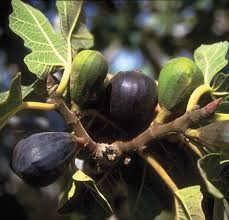
A beautiful fig tree leaf with fruit


For four days this week I thought that the hero/heroine of this story is the fig tree.
How many of you have seen fig trees? Leaf is from Mousa and Kris’s sun room in Essex.
Googled, fossils founds 12, 00 years ago, close to Jericho, the oldest continually inhabited city in the world. Even before wheat was cultivated, people in drier climates Middle East, Mediterranean cultivated figs; the fruit is delicious and nutritious, and the trees provide shade in dry desert climates and habitat for birds. In Genesis, Adam and Eve had fig trees!~
I’ve seen and loved large, towering fig trees in Italy; so large they don’t I’m sure need much manure; the figs droop and drop down, walking under then the delicious fruit smell wafts through the air.
I’ve also seen and stopped by fig trees, in Brooklyn, planted by people yearning for their homeland (Palestine, Italy), scrawny in about this much dirt and apartment building on one side and sidewalk on the other. Barely making leaves, rarely fruit.
A fig tree needs care, burlap over them in winter (for those I’ve seen in New Jersey) and fertilizer, from animals or maybe Jake’s liquid fertilizer from his worm bin, poured on the soil to nourish the roots, which, by the way, are extensive and deep to keep the tree alive in droughts and difficult environments.
This fig tree that the owner sees is barren, little seems to be happening, the juice of life has gone out.
A person living in Dismas of Vermont, which has residential programs to help ex-prisoners make the transition from prison to the community and a life of harmony and fruitfulness, wrote:
“Have you ever had a period in your life when indecision, confusion, dissatisfaction with your current position in life, and an overall feeling of helplessness had consumed you? Thrown up your hands and proclaimed “no mas”? It’s a veritable cornucopia of negative feelings and emotions that can be defeated only with help, and lots of it. A great support system, where people understand situations of this nature and will help someone start anew without judgment, a nurturing environment [that is Dismas House]”.
Or is the main character the owner, who says the truth, doesn’t mince words, and strips away denial: “You have no fruit.” Or, you are a goat, when I was hungry you did not feed me, thirsty, you did not give me drink, naked and you did not clothe me.”
And continues, unless you change and grow into who I meant you to be, into your full potential, you will feel that you have missed out, and it will gnaw at you, and you will become cynical, envious of others who seem to have it  better or have more; you will be biter and sad and judgmental.
And if the owner really gets going, he or she may say “you will never bear fruit again, your life is over; you are not of use to anyone; you are lost. You may as well curse life and die.”
Or is the main character the Gardener? “Come unto me all you who are weary and I will give you rest…for your souls.” It’s OK to be barren now, for a time; yes to have lost your creativity and not know what to do. It may seem like death…but..wait.
The Lenten study book’s [Falling Upwards: Spirituality for the Two Halves of Life] author Fr. Richard Rohr may speak the words of the Gardener: There are two halve of life, roughly divided by middle age. The first is outer focused, a career, a family, a worldly identity, building a container.
The second is an inner journey, an inner task to find the essence of the container, which is the soul.
And, speaking like a caring Gardener, there is no avoiding, in the change from the first to the second half, experiences that feel like death, failure suffering, loss, breakdown, powerlessness, barrenness.
Why? Because life itself knows cycles; winter and sinner; death that nourishes life. The Gardener says sometimes this is called the Dark Night of the Soul (which is a territory entered by people and perhaps even now the church); where the outer fruits (success in life; hundreds of people filling church pews) is no more; but there is deeper growth, and that takes time and nourishment; time to take in manure; to see that waiting yields insight like shoots that rise from ashes; that God is not a venture capitalist, focused on growth and profit and appealing new products for spiritual consumption but is rather a Gardener, attuned to the natural cycles of life and to what is underground and to the vulnerable, and who knows how to nourish roots.
The Gardener says “You don’t have to white knuckle solutions to the feeling experience of barrenness, of grief, aloneness, smallness, and  fear of (evidence of) the real problems that rightly scare you: church decline, violence, greed, hunger, diminishment of my beautiful forests and rivers and streams…
Behold, I make all things new, even you;
In order to bear fruit, you need friends, people who say they love you, and time, and not panic; God’s time is different, and isn’t about to cut you off at the knees.
Can you  accept the idea that you are not doing fabulous things. Bearenness is needed in order to usher in a deeper reality; it happens again and again throughout Lent and life.
We are like the ex-prisoner, needing a nurturing environment and people who love and are not judgmental; we are the hero and heroine who need to go through suffering to deepen spiritually, as in the 12-steps we are powerless.
What do you need that nourishes you? It’s not us ourselves that makes this happen; barennness helps us realize we need to wait…and rely on God in our need.
One parishioner spoke about her year of grief; going down deeply spiritually, trusting God and friends; and seeing nature as giving her insight…
To stand like that fig tree and be cared for isn’t so bad; is it possible that the owner is the super-ego,, demanding that we bear external fruit that is different from the purpose God wants to give us?
“Dark Night of the Church”—essay in the Christian Century, Rev. Tony Robinson, applied St. John of the Cross’ famous dark night imagery to the church: “ God at work wrenching our alluring memories of social prominence and significance from our minds, ripping dreams of fame and fortune from our imaginations?” Moving beyond the container to the essence.
God creates the Dark Night to strengthen faith in God, to realize our fundamental union with God in love. Sociological studies reveal a church in decline: conflict, aging, lack of young adults; church history rooms filled with trophies from the church’s softball team are rarely visited; the church in Europe and America has lost its social prominence.
Theological reality is different: Strength and life come from trust in God, not ourselves. What does God have to say about this, about us, we are asking in this time of envisioning, of long range planning? Could it be that the most important thing to do is wait and trust and be fed by God? That, contrary to the panicked need for answers or even an out, there is time enough to grow in depth of faith in God? Truly liberated from union with God in love will we be delighted in God’s good time by the fruits we will bear?  
Blessings, Pr. Nancy

Wednesday, December 5, 2012


We are now in Advent, a time of watching and waiting for the birth of Christ in our hearts and world.

I find myself slowing down; I want to stop and consider the sky, whether blue or grey, and the evergreens against the sky, now swaying with the breeze, and then sometimes blanketed with the pure white snow.

I’m inclined, thus, to do less, and feel, and write, and read, and pray, more.

I’m asking now, What can this New England winter season and the church year season of Advent teach us about ourselves, nature, the life of the spirit? How can the (now cold) waters of the lake baptize our life in winter Advent?

Can our instinct to slow down unfetter contemplative noticing of inexpressible longings for hoped-for birth?

Although Advent thoughts and feelings may be inward, soul-directed, they can never be private. I am sure of that. They deserve to be shared.

Hoping for the birth of Jesus Christ in the world and in our hearts is attendant on freedom (Mary’s “Yes”) and communal longing. A Messiah was long hoped for.

What do you long and hope for? What/who longs and hopes for your attention and care?  

Blessings in Advent, Nancy

Friday, August 10, 2012

Interim Alaska Report

We just returned from the Kenai Penninsula very concerned about climate change's effects on the animals and Native Americans and world climate as well as filled with the beauty of the area.
 
I have not had time to work on my blog but have many photos, which I will post soon. 
For now, please see this recent article from the Burlington Free Press, which expresses quite accurately what we have seen and thought about.
 
I continue on Saturday into the Inside Passages for the contemplative kayaking trip through August 19.
 

Tuesday, July 17, 2012

Vermont Water Reflections 2

Vermont Water Reflections 2

This past week brought new reflections, experiences, and friendships.

First, I sat next to the La Platte River, now a sanctuary, with parking behind the Zen Monastery in Shelburne. I had bushwhacked through a field and woods (discovering a spot where the grass was laid low, I assume by deer resting) to spend some time sitting along the stream. A bridge crosses over the river, with the information about the endangered fish, the Stonecat. But it takes some persistence to actually sit by the stream. I watched two dragon flies cavort above the stream in the sunshine and relaxed.


Several days later, I spent a full day at the home of parishioners, who had kindly given me permission (and a key) to spend time at their home whenever I wish to do so, while they spend the summer back in Minnesota. In the mountains outside Bristol, one hears no traffic noise. What a blessing to have a day in silence, broken only by birds. I read on Lutheran Spirituality, Duane Elgin’s The Elegant Universe, and The Tao of Liberation: Exploring the Ecology of Transformation (Mark Hathaway and Leonardo Boff), napped and prayed about Ascension, my friends, and family.


I took a walk down the road to a small stream with a little water fall. Such microcosms exist in nature; we only need to spend time, stoop down, and look. How beautiful.

And, finally, days later, I went on an all-day lake shore walk, where a new geologic map of Vermont was unveiled by walk leader Dr. Walter Poulman:

In the past week I've also spent several hours sitting and gazing at the lake, at Oakledge Park, including an afternoon where the wind blew and the energy seemed electric, another hour spent in the morning, early, with no one about, sitting on rocks. What quiet and solace we have all around us!

Last Monday, I began five days of sailing lessons. I knew little and ended learning about sailing directions (close-hauled, close reach, etc.), sides to the boat (starboard and port), etc. (of course, Jake could have taught me all this, too!).

Perhaps more important than the actual sailing lessons were reflections on the connections between sailing and the life of the church. The boat as the church is an ancient symbol; in meditations on this, first I saw myself as the skipper and Ascension parishioners as the crew (with the Holy Spirit as the wind), but that only lasted an hour or so: Ascension is a big boat, and I am only a beginning sailor! I felt frightened, but then I felt calmed when I saw Ascension (parishioners and pastor) as the crew, the Holy Spirit as wind, Christ as the skipper, and God as the sea (someone suggested that God could also be the person who fixes the boat when it malfunctions!).

We are kept sailing by the grace of God through Christ, upholding, leading, guiding, giving movement and beauty to our lives. And we are all in the boat, with all our foibles, contradictions, hopes, inadequacies, and idiosyncrasies, all still loved and knit together, and saved by Christ.

What does it mean to be saved by Christ?

My reading and understanding have continued with the wonderful book I Am/No Self: A Christian Commentary on the Heart Sūtra. Professors of Religion John and Linda Keenan, retired from Middlebury College, focus on John’s Gospel, the most mystical and symbolic of the Gospels. (This is of course where our sabbatical story of the Samaritan woman at the well is found, in chapter 4).

They write: “Perhaps we can envisage this Spirit as the living waters that flow from the innermost womb of our Christ being, of our hearts and minds identified and one with the Christ who is one with the Father.” (p. 157)

And “…the meaning of this gospel remains suspended and inaccessible to analysis. As such, however, it may liberate us—through constant prayer and meditation on our oneness with Christ—to abandon all our previously cherished views and to ratchet down our faith claims, not to lessen their significance, but to increase it!” (p. 123)

With the focus on our oneness with Christ, developed through prayer and meditation, I was further helped in my understanding of living water by the following from Water: Its Spiritual Significance:

“The fluidity of water and its constantly purifying aspect—the closer to the source it is, whether it be a spring, melted snow or rain, the purer it is—is a reflection of the soul’s ability to purify and renew itself. In spiritual terms this purification of the soul can only take place through the constant and sincere remembrance of God through prayer and meditation. As mentioned in the Introduction, proximity to water can open up our souls to Divine grace thereby aiding us in this remembrance.” (Emma Clark, “The Role and Significance of Water in the Islamic Garden,” p. 70)

Water makes life possible, both physically and spiritually, felt by humans through time. As we look into its depths and freshness, we see our own depths, and life, where we may find God.

But we don’t seem to treat water as reflecting our souls, or as life-bearer.

The one-hour presentation by Lutheran theologian and ethicist Larry Rasmussen, given at Gustavus Adolphus College summarizes beautifully all these issues (www.youtube.com/watch?v=Vcp56IvCwf4).

In one hour he gives facts about the world’s water crisis, which has occurred between 1950 and 2000, due to industrialization and world-wide consumption. The Earth’s water supply always remains the same; but only 1 percent of the world water is fresh. But one billion people lack fresh water to drink and climate change is making water sources more vulnerable. There is a precipitous decline in fresh water species—between 1970 and 2005, 35 percent of 458 fresh water species declined. And, remarkably, the US water footprint is largest in the world: it takes 766 gallons to produce a tea shirt; 2,867 for jeans; 15,000 for each couple pounds of burger beef. There is much we can do (watch the video to find out!).

Dr. Rasmussen ends with a quote from retired Congregationalist minister John Ames, of Gilead, Iowa, the central figure in the wonderful novel Gilead, by Marilynne Robinson, a memory that leads Ames to his beautiful reflection on baptism and water:

You and Tobias are hopping around in the sprinkler. The sprinkler is a magnificent invention because it exposes raindrops to sunshine. That does occur in nature, but it is rare. When I was in seminary I used to go sometimes to watch the Baptists down at the river. It was something to see the pastor lifting the one who was being baptized up out of the water and the water pouring off the garments and the hair. It did look like a birth or resurrection. For us the water just heightens the touch of the pastor's hand on the sweet bones of the head, sort of like making an electrical connection. I've always loved to baptize people, though I have sometimes wished there were more shimmer and splash involved in the way we go about it. Well, but you two are dancing around in your iridescent little downpour, whooping and stomping as sane people ought to do when they encounter a thing so miraculous as water.”

Let’s all of us whoop and dance because of the miracle of water!

Nancy

Tuesday, July 3, 2012

Water Reflections from Vermont

Water Reflections from Vermont

I now sit every day next to a stream, river, or the lake. I watch, and listen and pray. I seek God’s living water, Jesus Christ, in actual Vermont water.

Two weeks ago, with a friend, I walked Potash Brook, for two hours. (To prepare, I met with Teage O’Connor, who teaches Eastwoods Natural History at UVM and knows Potash Brook, which flows through Eastwoods, then behind my house, and then about 2 miles further into Lake Champlain at Red Rock Point). Teague had laid out three two-hour walks for me, penciling into my journal the walks’ ends and beginnings, especially where to choose to follow the brook under Interstate 89 and Route 7 (or alternatively walk over land). 

My friend and I entered the Brook beyond the Swift Street power lines. In sneakers, we navigated boulders, mud, quiet sun lit patches, and thigh-deep water, always meandering slowly. Birds and the sound of interstate traffic mingled with our reflections: “This is wonderful; we used to play in streams for hours as children; why aren’t more people, especially children, in the water?”  

 We followed the tracks of a raccoon, distinguishing its marks with a ruled track finder. The little animal had walked along the banks, into and out of the water. We watched iridescent dragon flies. Mid-point we stopped for fifteen minutes just to watch the reflections of trees and sun, silently. A beautiful day, ending at Klinger’s Bakery parking lot, with a feeling of gratitude for family and friends, for all the love I’ve received in life.  
[photo of Potash Brook]

Then last week, I drove to Richmond on a friend’s advice and sat at the Winooski River for an hour, deep in ferns. I wrote:

“Light shimmering, birds skimming, blue and green light,a cloud, gentle breeze, summer (the beauty of water)”

The Richmond Rivershore Natural Area, where I sat, not far from the historic Round Church, is “distinguished by Ostrich Fern and canopy of silver maple,” and is a rare river floodplain forest. I perched my little canvas chair “lean” in ferns on the riverbank and watched. After about one-half hour, a Green Heron suddenly landed on the dead branch above; at first I had trouble distinguishing it from a kind of living stick with a topknot; then I saw its yellow eye, or, rather, its eye saw me, and rotated and glinted; with the sun on it, I felt small, beneath a direct, unpitying, almost unnatural gaze.

Yesterday morning  I finished reading Episcopal priest Cynthia Bourgeault’s book The Wisdom Way of Knowing: Reclaiming an Ancient Tradition to Awaken the Heart. I reflected on how important what I now term “in between spaces” are in our lives. I’ve had them, as hopefully everyone who reads this blog has: for me they include sabbatical, Italian vacations, time in nature, meditation, being with a beloved, reading, reverie, worship. These moments of deep repose, where we are open enough to become closer to our deepest selves, can occur when we are caught up in something, when we may feel like we are no more than playing. They can occur as we lose ourselves, when we pay full attention.

Consider Mary Oliver’s poem: “It doesn’t have to be/The blue iris, it could be/Weeds in a vacant lot, or a few/Small stones; just/Pay attention, then patch/A few words together and don’t try/ to make them elaborate, this isn’t/ a contest but the doorway/into thanks, and a silence in which/another voice may speak.”—Mary Oliver

I long to pay attention and to hear.

Yesterday was my third Vermont water outing. This time I drove south.

After enjoying the Otter Creek waterfall at Vergennes [photo], I drove up Sand Road and hiked to the bluff at Kingsland Bay State park. (“Lake Champlain’s cobble beaches, cliffs, limestone cedar bluffs and rich oak-hardwood forests are the main features at this 1.5-mile lakeshore preserve. Marine fossils have been found in some of the shoreline bedrock. There is a deer yard and a number of rare plants, including autumn coralroot, golden corydalis, blue field madder and veiny meadow rue [from Places to Walk, Paddle and Explore in Vermont, The Nature Conservancy, 50th anniversary edition]."

I waited for the sounds of the lawn mower on the grounds of historic (1790) Hawley House to subside as I hiked to the endpoint through the woods. I watched the lake through the trees on the shoreline cliff for an hour. I wanted to pay attention, as in Mary Oliver’s poem.


Luther’s definition of worship came to mind. “Our dear Lord himself may speak to us through his holy Word and we respond to him through prayer and praise.” Again, I felt deep respose and a deep sense of God's love.

The Bible teaches that the Word (God's voice) is (speaks to us) in all things (John 1:3;  Colossians 1:15-16). Do we pay due attention?